
The Story of Rescue
3rd Sunday of Advent
[Note: This is Part 3 of “The Story of Rescue,” an Advent series exploring the biblical narrative of God’s rescue plan through Jesus Christ. ReadPart 1: Longing and Anticipation| Part 2: The Unexpected Announcement.]
If you were God and decided to enter human history to rescue humanity, how would you do it? The answer seems obvious. You’d arrive with unmistakable power and authority. You’d be born in a palace, surrounded by wealth and influence. You’d make your entrance in a way that left no doubt about your identity and importance. You’d command immediate respect and recognition.
But that’s not what happened. When the eternal Son of God took on human flesh, he entered the world in the most vulnerable, humble way imaginable. No palace, but a stable. No royal attendants, but barn animals. No announcement to the powerful, but to shepherds—among the lowest in the social hierarchy. The King of heaven came as a helpless infant, born to a young peasant girl in an obscure village, laid in a feeding trough because there was no room anywhere else. This is the scandal of the incarnation. God didn’t just rescue us from a distance. He entered into our condition completely, taking on our humanity in its most vulnerable form. And in doing so, he revealed something profound about the nature of his kingdom and the character of his rescue.
The census and the sovereign plan
Luke begins the birth narrative not with theology but with history: “In those days a decree went out from Caesar Augustus that all the world should be registered” (Luke 2:1). This wasn’t a minor administrative detail. Caesar Augustus, the most powerful man in the world, had ordered a census for taxation purposes. It would require people throughout the empire to return to their ancestral homes to be registered.
For Mary and Joseph, this meant a difficult journey from Nazareth to Bethlehem—roughly 80 miles, which Mary would have to travel in the final days of her pregnancy. By any human measure, this was terrible timing. Why couldn’t the census have come a few months earlier or later? Why did it have to happen right when Mary was about to give birth?
But Luke wants us to see something crucial: behind Caesar’s decree stood God’s sovereign plan. Seven hundred years earlier, the prophet Micah had declared that the Messiah would be born in Bethlehem (Mic. 5:2). Now, through a Roman census, God was orchestrating events to fulfill that ancient prophecy. The most powerful emperor in the world, who knew nothing of these prophecies and cared nothing for Jewish expectations, became an unwitting instrument in God’s hands.
This sets the pattern for the entire incarnation story. Human authorities think they’re in control, making decisions based on their own interests and agendas. But God is working behind, beneath, and through all of it to accomplish his purposes. Caesar thought he was conducting a census. God was bringing the Messiah to Bethlehem.
The humble birth
When Mary and Joseph arrived in Bethlehem, they found no available lodging. The town was crowded with people responding to the census. Whatever accommodations existed were already taken. So when the time came for Mary to give birth, she had to deliver in the most primitive conditions imaginable:
And she gave birth to her firstborn son and wrapped him in swaddling cloths and laid him in a manger, because there was no place for them in the inn. (Luke 2:7)
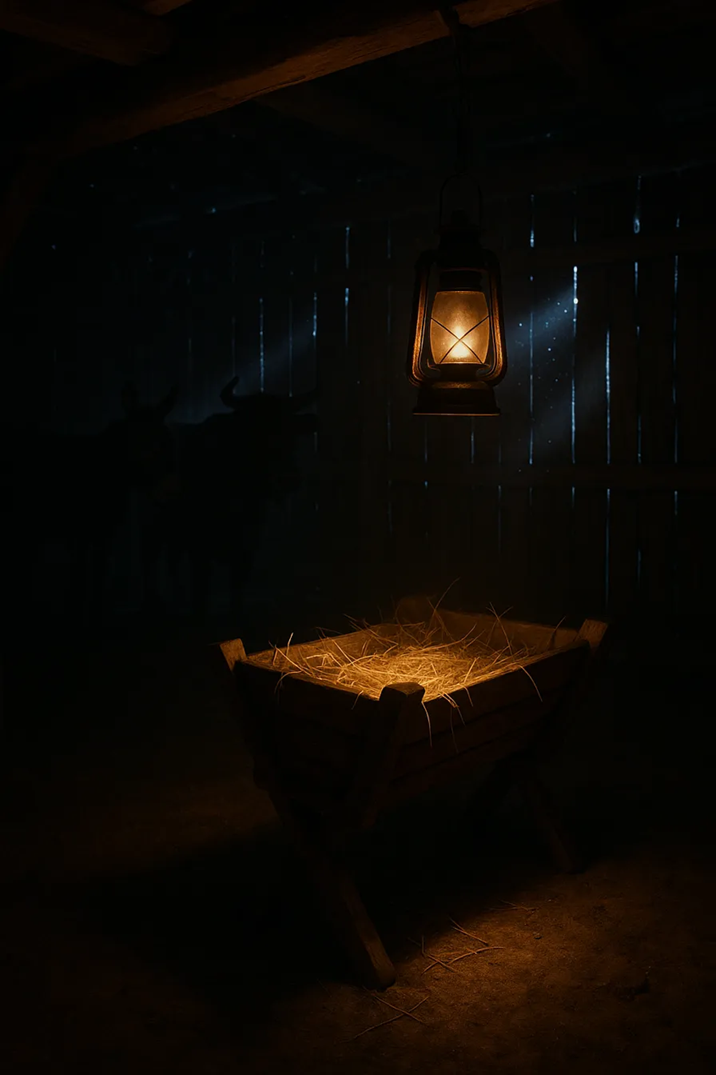
Think about what Luke is describing. A manger was a feeding trough for animals. This wasn’t a quaint, sanitized nativity scene—it was a dirty, smelly, uncomfortable place. The Creator of the universe, the one through whom all things were made, entered his creation in utter humility and vulnerability. The King who would reign forever began his earthly life in a borrowed stable, surrounded by the sounds and smells of livestock. Why? Why would God choose this entrance into human history?
The incarnation reveals God’s character
The humble circumstances of Jesus’ birth weren’t accidental or unfortunate—they were essential to revealing the nature of God’s kingdom. In the world’s kingdoms, power is displayed through wealth, military might, and political influence. Leaders demand respect and enforce their authority through threat and force. But God’s kingdom operates by completely different principles.
Paul would later write to the Philippians about the incarnation:
Though he was in the form of God, [He] did not count equality with God a thing to be grasped, but emptied Himself, by taking the form of a servant, being born in the likeness of men. And being found in human form, He humbled himself by becoming obedient to the point of death, even death on a cross. (Phil. 2:6-8)
The stable in Bethlehem was the first step in this descent. Jesus didn’t cling to the privileges and prerogatives of deity. He willingly set them aside to become one of us. He didn’t come demanding our service—he came to serve. He didn’t come exercising his rights—he came surrendering them. He entered our world at its lowest point to reach us where we actually are.
This is the staggering truth of Christmas: God didn’t rescue us from heaven’s throne room, issuing commands and expecting compliance. He entered into our broken, messy, painful reality. He experienced human vulnerability, human limitations, human suffering. He knows what it’s like to be cold, hungry, tired, and homeless because he experienced all of it himself.
The announcement to shepherds
If the birth itself was humble, the announcement was equally so. When angels appeared to declare the Messiah’s arrival, they didn’t go to Herod’s palace in Jerusalem or the Sanhedrin in the temple. They went to shepherds in the fields:
And in the same region there were shepherds out in the field, keeping watch over their flock by night. And an angel of the Lord appeared to them, and the glory of the Lord shone around them, and they were filled with great fear. And the angel said to them, “Fear not, for behold, I bring you good news of great joy that will be for all the people. For unto you is born this day in the city of David a Savior, who is Christ the Lord. And this will be a sign for you: you will find a baby wrapped in swaddling cloths and lying in a manger.” (Luke 2:8-12)
Shepherds occupied one of the lowest rungs of the social ladder in first-century Judaism. They were considered ritually unclean because of their work, which made them ceremonially unfit for temple worship. They were often viewed as dishonest and untrustworthy. They had no social standing, no influence, no power.
Yet these were the first to hear the gospel announcement. Not the religious elite. Not the politically powerful. Not the wealthy and influential. The shepherds—those whom society marginalized and dismissed—received the honor of being the first evangelists, the first to seek out and worship the newborn King.
The sign that requires faith
Notice what the angel told the shepherds: “This will be a sign for you: you will find a baby wrapped in swaddling cloths and lying in a manger” (Luke 2:12). That’s the sign? A baby in a feeding trough?
By human standards, this is no sign at all. It’s not impressive. It’s not powerful. It’s easily missed and easily dismissed. A Roman soldier looking for a king would walk right past this baby without a second glance. A Jewish scholar expecting the Messiah might not recognize him in such humble circumstances. But that’s precisely the point. God’s rescue doesn’t announce itself with the markers of worldly power and prestige. It comes humbly, quietly, in ways that require faith to recognize. The shepherds had to believe the angel’s words enough to go looking for a baby in a feeding trough. They had to trust that this unlikely, humble scene was actually the cosmic moment the world had been waiting for.
And when they found him, they believed: “And the shepherds returned, glorifying and praising God for all they had heard and seen, as it had been told them” (Luke 2:20).
The cosmic significance of the humble arrival
Don’t let the humility of the setting obscure the magnitude of what was happening. This wasn’t just a special baby being born. This was the eternal Word becoming flesh (John 1:14). This was God himself taking on human nature, uniting deity and humanity in one person forever. This was the beginning of the rescue operation that would culminate at the cross and the empty tomb.
The angels understood this. After the angel announced the birth to the shepherds, “suddenly there was with the angel a multitude of the heavenly host praising God and saying, ‘Glory to God in the highest, and on earth peace among those with whom he is pleased!’” (Luke 2:13-14).
Heaven knew what was happening even if earth didn’t fully comprehend it yet. The birth in Bethlehem was a world-changing event. The rescue humanity had longed for since Genesis 3 was now underway. The light Isaiah had prophesied was breaking into the darkness. The King who would reign forever had arrived.
But he arrived as a servant. He came in weakness to demonstrate true strength. He entered in humility to display true glory. And in doing so, he redefined everything we thought we knew about power, kingship, and salvation.
Heaven breaks into earth
The incarnation is the ultimate collision of heaven and earth. The infinite God took on finite human nature. The eternal entered time. The Creator became creature. The one who sustains all things by the word of his power became a helpless infant who needed to be fed, changed, and protected.
This is the great mystery Paul speaks of: “Great indeed, we confess, is the mystery of godliness: He was manifested in the flesh” (1 Tim. 3:16). How can God become human without ceasing to be God? How can the infinite be contained in the finite? How can the eternal enter time?
We can’t fully comprehend it. But we can trust it, worship in response to it, and let it reshape how we understand God and his ways.
What the humble arrival teaches us
The manner of Christ’s entry into the world reveals essential truths about God’s character and his kingdom that we desperately need to understand.
God identifies with the lowly
Jesus didn’t come to the powerful, the privileged, or the prestigious. He came to the poor, the marginalized, the overlooked. He was born in poverty, announced to shepherds, and raised in an insignificant village. Throughout his ministry, he would continue this pattern—touching lepers, eating with tax collectors and sinners, welcoming children, and showing compassion to those society rejected.
This matters profoundly for how we understand the gospel. Salvation isn’t reserved for those who have their lives together or who meet certain social standards. It’s offered freely to anyone who recognizes their need and comes to Christ in faith. The humble arrival teaches us that God reaches down to us in our low estate, not waiting for us to climb up to him.
True power is displayed in weakness
The world measures power by dominance, force, and control. But God’s power is most fully displayed in apparent weakness. The baby in the manger would grow up to die on a cross—another moment of seeming weakness that was actually the ultimate display of divine power, conquering sin and death through sacrificial love.
This turns our understanding of strength and weakness upside down. We think we need to be strong, capable, and self-sufficient to matter or to be used by God. But the incarnation teaches us that God works most powerfully through our weakness when we depend entirely on him.
God meets us where we are
Jesus didn’t remain in heaven and send instructions from afar. He came. He entered our world, experienced our limitations, faced our temptations. He knows what it’s like to be human because he was fully human (while remaining fully God).
This means we can come to him with confidence, knowing he understands our struggles. “For we do not have a high priest who is unable to sympathize with our weaknesses, but one who in every respect has been tempted as we are, yet without sin” (Heb. 4:15). The humble arrival in Bethlehem was the beginning of God’s complete identification with us in our human condition.
Our response matters more than our status
The shepherds had nothing to offer except their worship. They couldn’t contribute financially to Jesus’ ministry. They had no social connections to leverage. They couldn’t protect him or advance his cause. All they could do was bow down and worship.
And that was enough. In fact, that’s everything. God doesn’t need our resources, our influence, or our abilities. He wants our hearts. He calls us to recognize who Jesus is and worship him accordingly, regardless of our social status or personal qualifications.
Application points
Examine your expectations of how God should work: Consider whether you unconsciously expect God to work through impressive circumstances, powerful people, or socially respectable means. Reflect on how you might be missing his work because you’re looking for the wrong signs.
Embrace humility as the path to true greatness: Jesus modeled servant leadership from his very birth. Identify where in your life you’re grasping for status, recognition, or power instead of following Christ’s example of humble service.
Recognize that God identifies with your struggles: Jesus entered into human weakness and vulnerability. Whatever you’re facing—poverty, rejection, suffering, limitation—Christ has experienced it and understands. Let this truth change how you pray and relate to God.
Value what God values: The world celebrates power, wealth, beauty, and influence. God chose a stable, shepherds, and obscurity. Consider whether you’re pursuing what the world values or what God values. Think about how your priorities would change if you truly believed that humility and faithful service matter more than external success.
Offer what you have, not what you lack: Like the shepherds, you may feel you have nothing impressive to offer God. But he’s not asking for impressive—he’s asking for worship, faith, and obedience. Identify what humble offering you can bring to Christ this Advent season.
For reflection this week
- The stable in Bethlehem reveals that God’s kingdom operates by completely different values than the world’s kingdoms. Where in your life are you still operating by the world’s definition of success, power, and importance rather than God’s?
- Jesus willingly embraced vulnerability and weakness in the incarnation. What vulnerabilities or weaknesses are you trying to hide or overcome through your own strength instead of allowing God to work through them?
- The shepherds were considered ceremonially unclean and socially unacceptable, yet they were chosen to receive the gospel first. Do you believe God can use you despite your disqualifications, or are you still waiting to become “worthy enough” before fully offering yourself to him?
- The humble circumstances of Christ’s birth were easily missed by those looking for conventional signs of power and importance. What might you be missing about how God is working in your life because you’re looking for something more impressive or dramatic?
- God orchestrated a Roman census to fulfill an ancient prophecy, working through circumstances that seemed inconvenient and difficult for Mary and Joseph. How might God be working through your current difficult circumstances in ways you can’t yet see?
2 responses to “The Humble Arrival”
[…] [Note: This is Part 4 of “The Story of Rescue,” an Advent series exploring the biblical narrative of God’s rescue plan through Jesus Christ. Read Part 1: Longing and Anticipation | Part 2: The Unexpected Announcement | Part 3: The Humble Arrival.] […]
[…] through Jesus Christ. Read Part 1: Longing and Anticipation | Part 2: The Unexpected Announcement | Part 3: The Humble Arrival | Part 4: The Response of […]